Why We Gave Away the Thing We Usually Charge For
The case for a free AI visibility check with no signup wall - and what building it taught us about how many sites are invisible to AI crawlers for one avoidable reason.
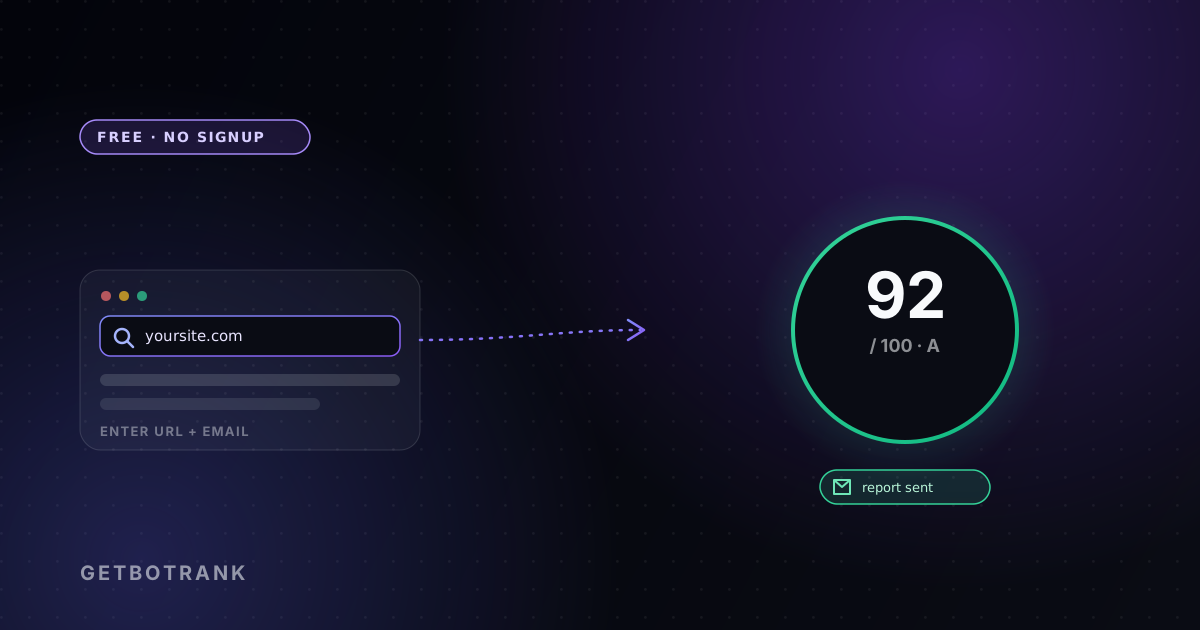
Every "free audit" tool follows the same script: enter your URL, wait, then hit a signup wall for the part that actually tells you anything. We've run GetBotRank as a paid product for months, so we know exactly why that pattern exists - the analysis costs money to run. But it bothered us enough that we shipped the exception: a free AI visibility check that needs nothing but a URL and an email, and shows you a real score before it asks for anything else.
The part we could give away for free
GetBotRank's full audit blends two layers: deterministic checks (does the crawler even see your content, is the markup sane) and multi-model content scoring (what do GPT-4o, Claude, and Gemini actually think of the page). The second layer is expensive - it's the reason the product costs money.
The first layer isn't. It's code running against your HTML: is the content in the initial response or only after JavaScript runs, is there one clean H1, does structured data exist, is there an llms.txt. None of that touches an LLM, so there was no real reason to meter it. We were charging for something adjacent to a cost we weren't actually incurring on that layer. Once we noticed that, the free tool built itself.
What building it made obvious
We'd read the audit reports for months, but reducing the free version down to five checks that run in seconds forced us to rank them - and one problem dwarfs the rest.
Client-rendered SPA shells. Over and over, sites that look completely normal in a browser return almost nothing in the raw HTML response - the entire page is a <div id="root"> that only fills in after JavaScript executes. GPTBot, ClaudeBot, and PerplexityBot largely don't run that JavaScript. To them, the page is close to blank. It's not a subtle misconfiguration; it's the single most common reason a site scores badly, and it's invisible unless you look at what a crawler actually receives instead of what your browser renders.
That's why the free tool caps a page's score hard the moment it detects this, regardless of how clean everything else is. Perfect heading structure and flawless schema markup don't matter if the crawler never gets far enough to read them.
No wall, on purpose
The scan runs immediately - no account, no credit card, no credits spent. You get a score and grade on the page itself. The full checklist, with why each item matters and how to fix it, lands in your inbox a moment later, because that's genuinely more useful as a document you can act on than as a page you'll close and forget.
If the answer comes back clean, you're done - that's a real, complete answer to "can AI crawlers read this page," not a trial designed to make you upgrade out of frustration. If it flags the SPA-shell problem or something else, that's exactly the actionable signal the tool exists to surface, and from there the full audit is there for the parts code alone can't measure: multi-model content scoring, ongoing monitoring, and an MCP server that hands the issues straight to a coding agent to fix.
Try it
getbotrank.com/free-audit - drop in a URL, see your score in seconds.