4 Free Tools to Check If Your Site Is Actually Visible to AI
We shipped four free, no-signup tools that each answer a different piece of one question: what does an AI crawler actually receive when it requests your page? No LLM calls, no credit card, no crippled trials.
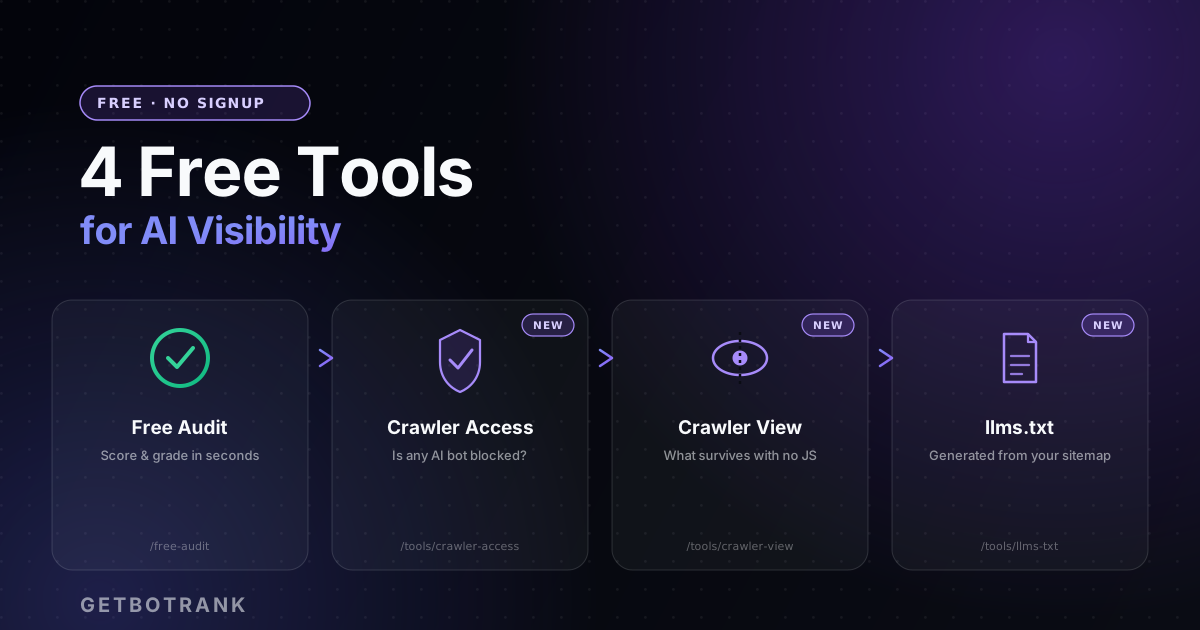
A browser and an AI crawler can look at the exact same URL and see two completely different pages. That gap - what a human sees versus what GPTBot, ClaudeBot, or PerplexityBot actually receives - is the thing our whole product exists to close. Over the last few weeks we pulled four different pieces of that question out into their own free, no-signup tools. Here they are.
The free AI visibility audit
The original. Five deterministic checks - crawlability, heading structure, structured data, an llms.txt/llm.txt/ai.txt check, and metadata completeness - rolled into one score and grade. Enter a URL and an email, get a real score in seconds, no credit card, no signup.
AI Crawler Access Checker
getbotrank.com/tools/crawler-access
Is any AI crawler being blocked outright - and did anyone actually decide that? We check your site against every major AI crawler out there, and when something's blocked, we can tell you whether it was a deliberate call or just a CDN default nobody consciously turned on - Cloudflare's managed AI-bot rules being the usual suspect.
Crawler View
getbotrank.com/tools/crawler-view
What text actually survives when JavaScript never runs? Side by side: what your visitors see versus what an AI crawler actually receives from the same URL. If your content only shows up after a script populates the page, this is where that becomes impossible to miss instead of invisible.
llms.txt Generator
Generates a real llms.txt for your site - real page titles and descriptions, organized into sections, nothing invented to fill gaps. If you already have one, we'll show you exactly what changed.
Why four separate tools instead of one
Because "can AI read this page" isn't one question. It's "is it blocked," "does it render," and "is there a file telling crawlers what matters" - three different failure modes with three different fixes, and bundling them into one score (which the audit still does, for a quick read) hides which one actually applies to you. Splitting them out means you can go straight to the one that matches whatever you're actually debugging.
What all four have in common
None of them call a model. Not one request in any of these four tools ever reaches an LLM, which is also why they can stay free at any volume instead of being metered like the multi-model audit is. And none of them are crippled trials: every one returns a complete, real answer, not a teaser that pushes you toward upgrading out of frustration.
They also talk to each other. Find a block in the Crawler Access Checker, and it hands you straight to Crawler View for the same URL. Find an empty shell in Crawler View, and it points at the full audit. Generate a perfect llms.txt, and it reminds you that file is worthless if a crawler is blocked before it ever gets read - and links you to the checker that tells you.
Try them
Free audit - Crawler Access Checker - Crawler View - llms.txt Generator
Four URLs, four different answers, no signup wall beyond an email on any of them.