Reddit's ChatGPT Citations Fell 86% in Four Days. Here's the Actual Mechanism.
Reddit's share of ChatGPT Search citations dropped from 3.83% to 0.52% between August 14-17, 2026, per tracking from AI visibility platform Promptwatch. The cause traces to a query fan-out change, not a manual deranking - and it's a sharp illustration of how fragile any single-source citation share really is.
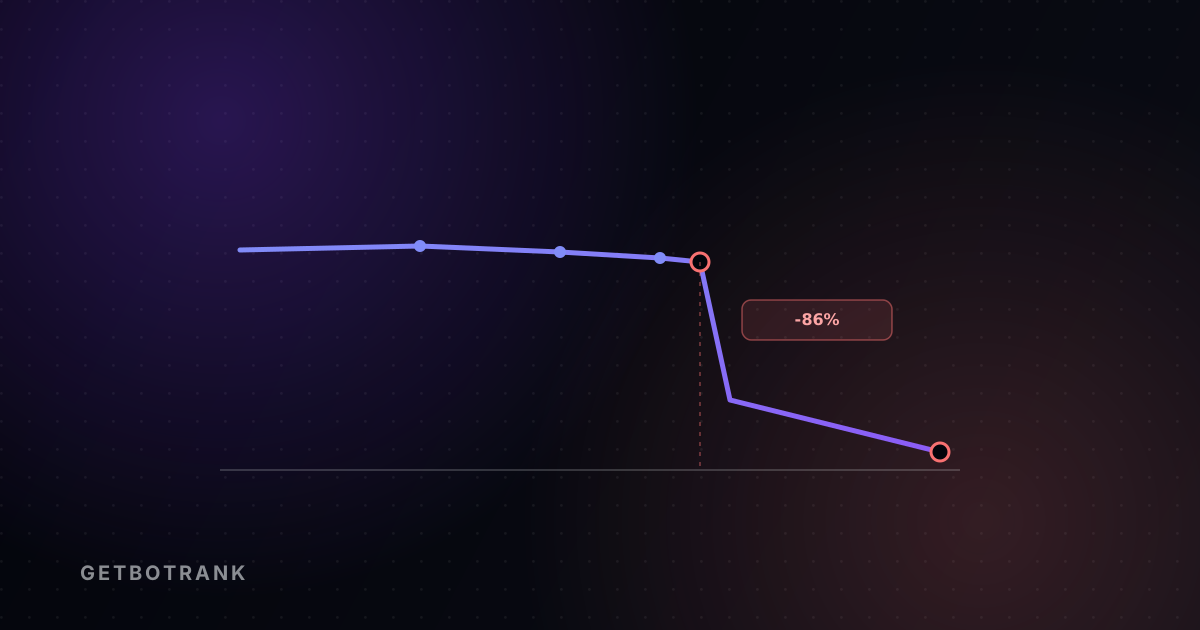
In mid-August 2026, Reddit's share of ChatGPT Search citations collapsed - fast. AI visibility platform Promptwatch tracked the decline in two distinct steps: a first drop on August 8, the same day ChatGPT Search changed how it constructs its query fan-out, pulling Reddit's citation share from the high-3% range into the mid-2% range; then a larger second drop starting August 14, taking it from 3.83% down to an average of 0.52% by August 17. No announcement from OpenAI. No evidence Reddit was intentionally deranked or blocked. Just a four-day collapse in one platform's share of one AI product's citations.
What actually changed
The mechanism, as best reconstructed from the tracking data, is a change in query fan-out behavior - how ChatGPT Search breaks a user's question into multiple sub-queries before retrieving sources. Reporting points to the model leaning more heavily on site: operators to interrogate specific domains directly, rather than issuing broader open-web searches that happened to surface Reddit threads as a byproduct. If that's the mechanism, Reddit didn't get worse as a source - it simply stopped being one of the domains the fan-out step reaches for by default.
This is worth sitting with for a second, because it's a different failure mode than anything covered by classic SEO monitoring. Nothing about Reddit's content, authority, or crawlability changed. No penalty was issued. The citation share moved because the retrieval logic upstream of citation changed, silently, inside a product neither Reddit nor any site owner controls.
Why this matters beyond Reddit specifically
Each AI engine has developed what amounts to a distinct citation personality: ChatGPT has leaned encyclopedic, with Wikipedia its single most-cited source; Perplexity is comparatively community-driven, with Reddit historically a heavy contributor; Google's AI surfaces pull significantly from forums like Reddit and Quora as well. Reddit's ChatGPT-specific collapse is notable precisely because it hit a source that had been unusually important to that one engine's citation mix - and it happened without warning, over days, from an infrastructure change nobody outside OpenAI announced.
That's the generalizable lesson, not the Reddit specifics. If a meaningful share of your brand's AI citations comes through one third-party surface - a forum, a review aggregator, a specific publication - that concentration is a single point of failure you don't control and can't see coming. We've written before about why old measurement stacks can't see what AI engines are doing with your content; this is a concrete example of the kind of change that stack would have missed entirely, because nothing in Search Console or GA4 would register it.
What to actually do about it
- Diversify where your citations come from. Don't build a GEO strategy that leans on one third-party channel's current citation behavior, because that behavior is a product decision made by a company you don't work for, and it can change in four days.
- Own the fallback. Structuring your own content so a model can quote it directly matters more, not less, when third-party citation sources are this volatile - it's the one channel where the "algorithm" is your own page, not someone else's platform.
- Measure citation share per engine, continuously, not per source. A single monthly spot-check wouldn't have caught a change that fully played out over four days. GetBotRank's Visibility Tracker runs recurring buyer-intent checks across ChatGPT, Claude, and Gemini specifically so a shift like this shows up as a trend line while it's happening, not as a surprise you piece together from someone else's blog post weeks later.
Rankings in classic search can be volatile too, but they rarely move 86% in four days from an unannounced change nobody outside the platform can see directly. That volatility is the actual argument for treating AI citation tracking as its own discipline, distinct from - and faster-moving than - the SEO monitoring habits most teams already have in place.