Your AI Referral Traffic Is Hiding in 'Direct' - Here's How to Find It
GA4 quietly undercounts traffic from ChatGPT and Perplexity because so many AI referrals arrive with no referrer at all. What's actually happening, and how to build a channel view you can trust.
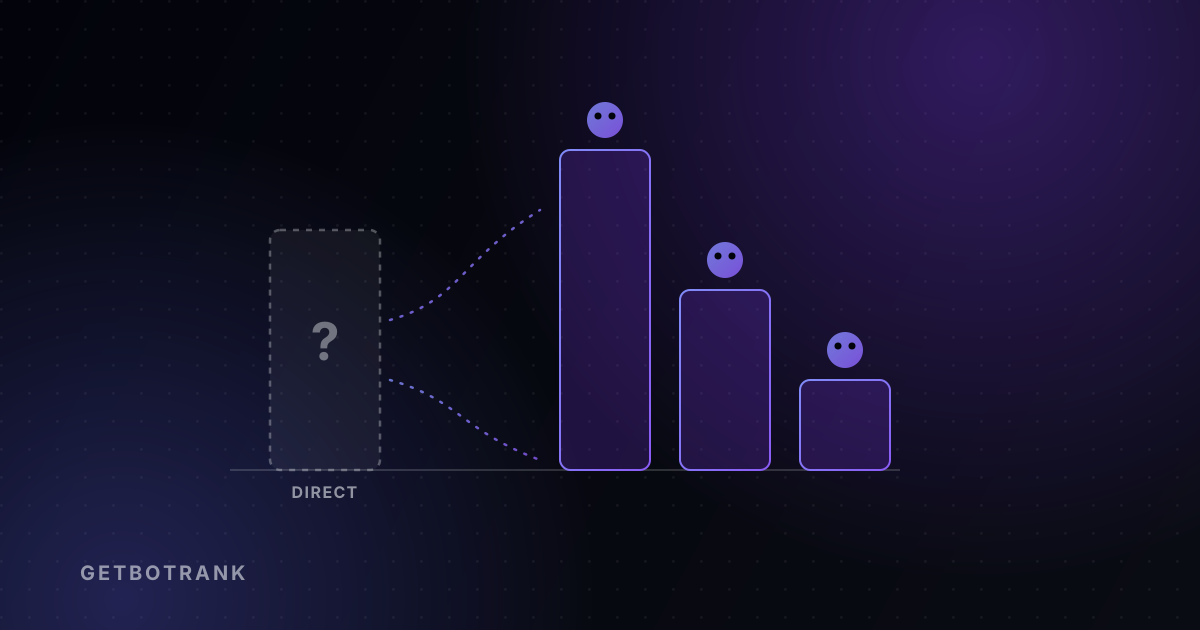
If your Google Analytics dashboard shows a flat line for AI referral traffic, that's probably not because AI answer engines aren't sending you visitors. It's more likely that a large share of them are arriving with no referrer header at all - and GA4 buckets anything without one straight into "Direct," alongside actual bookmark visits and typed-in URLs. Teams that haven't gone looking for this specifically tend to be undercounting their real AI-driven traffic by a wide margin.
This sits on top of the deeper measurement gap we've written about before - zero-click citations that never send a visitor at all. This post is about the narrower, more fixable problem: the clicks that do happen, but that your analytics can't currently see correctly.
Why the referrer goes missing
A few things break attribution at once:
- Native app webviews. When someone taps a citation link inside the ChatGPT or Perplexity mobile app, the resulting browser session frequently doesn't carry a standard referrer header the way a link clicked in a desktop browser tab does.
- Client-side answer rendering. Some answer surfaces render citations and navigate via JavaScript rather than a plain anchor tag, which can drop or rewrite the referrer depending on the implementation.
- Redirect chains. A citation link that routes through a tracking or redirect service before landing on your domain can lose the original referrer partway through the chain.
None of this is a conspiracy - it's the standard, decades-old behavior of the referrer header applied to a new category of traffic source that didn't exist when the header was designed. The result is the same either way: a real visitor, sent by a real AI citation, showing up in your reports as if they typed your URL from memory.
What changed in GA4 this year
Google added a native AI Assistant channel to GA4 in 2026, which automatically buckets recognized sources like ChatGPT and Gemini instead of leaving them in Direct or an unlabeled Referral bucket. It's a real improvement and worth confirming is active in your property. But it has two gaps worth knowing about before you trust it as a complete picture:
- It doesn't catch every platform. Coverage has focused on the largest AI products first; check whether the ones your buyers actually use (Perplexity, in-product assistants, regional players) are included before assuming they're accounted for.
- It still can't classify a referrer-less session. The native channel works by pattern-matching known referrer strings and UTM-like signals. Sessions that arrive with genuinely no referrer at all - the webview and JS-navigation cases above - still fall through into Direct, native channel or not.
Building a view you can actually trust
Until referrer-less attribution gets solved industry-wide, treat GA4 as a floor, not a ceiling, and layer a few things on top of it:
- Confirm the native AI Assistant channel is picking up what it can. Check GA4's channel group reports and make sure it's active on your property; it's a free improvement over an unlabeled Direct bucket.
- Build a custom channel group as a backstop. Under Admin > Channel Groups, add a rule matching session source against known AI domains (
chat.openai.com,perplexity.ai,gemini.google.com,copilot.microsoft.com, and any redirect domains you've identified) so sessions that do carry a referrer get segmented cleanly, even if the native channel's coverage lags. - Sanity-check Direct traffic for AI shape. A spike in Direct sessions landing on deep, non-homepage URLs - especially pages that read like citable answers rather than pages people bookmark - is a reasonable proxy signal that some share of it is unlabeled AI traffic, even though you can't prove which visits individually.
- Don't stop at click-based measurement. Referral tracking, even fixed, only ever captures the visits where someone clicked through. It says nothing about the citations that answered the question directly and never generated a session. A Visibility Tracker that runs real buyer questions against ChatGPT, Claude, and Gemini on a schedule gives you the mention-rate side of the picture that referrer data structurally can't - independent of whether a given citation happened to include a clickable link.
The realistic takeaway
Perfect AI-traffic attribution isn't available from any single tool right now, including GA4's newest channel. The practical move is to stop treating a flat "Direct" line as evidence that AI answer engines aren't sending you traffic, layer in the segmentation you can control, and pair click-based analytics with a direct measurement of citation and mention rate - so a broken referrer header isn't the only thing standing between you and knowing whether your AI visibility is actually working.