ChatGPT Now Sells Ads - Which Makes Your Organic AI Visibility More Valuable, Not Less
OpenAI's Sponsored Recommendations hit $100M in annualized revenue within six weeks of launch. Here's why that makes earning an organic citation more important than ever, not less.
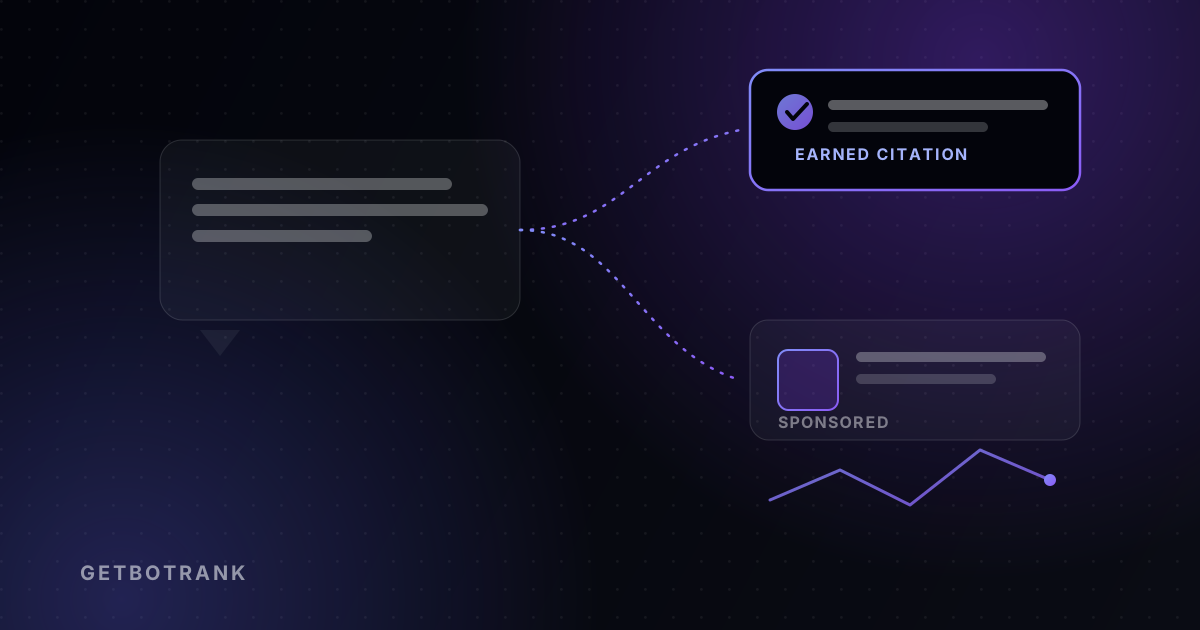
OpenAI launched Sponsored Recommendations inside ChatGPT as a US pilot on February 9, 2026, then opened it to self-serve advertisers on May 5, 2026. The format is deliberately restrained: a contextually matched product card appears beneath ChatGPT's answer, clearly labeled "Sponsored," triggered by the semantic thread of the conversation rather than a keyword match. It reportedly reached $100 million in annualized revenue within six weeks of launch - a fast start for what is effectively a brand-new ad channel.
For brands, this changes the shape of the AI answer page for the first time. Until now, showing up in a ChatGPT response meant one thing: the model chose to mention you, unprompted, because it judged your brand relevant and trustworthy. Now there are two distinct ways to appear - earned, inside the answer itself, and paid, in a labeled card underneath it. That distinction is about to matter a lot more than it sounds.
Two placements, two very different signals
- The organic answer. This is the model's own synthesis - what it decided to say about your category, and whether your brand made the cut. It's driven by the same forces that drive citations generally: structured, self-contained content, third-party mentions, and a track record the model has learned to trust.
- The sponsored card. This is a paid placement, contextually triggered and clearly labeled as an ad. It buys you a guaranteed slot beneath the answer, but it doesn't touch what the model actually said above it.
Users are already learning to read the difference the way they learned to skip banner ads and scroll past "Sponsored" results in Google. A sponsored card can win a click. It can't win trust the way an unprompted mention inside the answer does - and early research on AI citation behavior backs that up: AI answers draw the large majority of their citations from earned, third-party editorial content rather than brand-owned or paid material.
Why this raises the value of organic mentions, not lowers it
It would be easy to read "ChatGPT sells ads now" as reason to shift budget from earning citations to buying placements. The opposite is closer to true:
- Sponsored cards make the organic answer more scrutinized, not less. Once users know a paid slot exists, the unpaid line above it reads as more credible by contrast - which raises the stakes on actually earning a place there.
- You can't buy your way into the answer itself. Sponsored Recommendations sit below the response; they don't rewrite what the model says. If your brand isn't part of the model's trusted picture of your category, no ad budget changes that.
- Paid and organic are now separable metrics, and conflating them will hide real problems. A brand could be running sponsored cards while its organic mention rate quietly declines - and if nobody is tracking the two separately, that decline goes unnoticed until it shows up as declining branded search or dwindling AI-referred traffic.
What to actually track now
With two channels live inside the same surface, measurement needs to split the same way:
- Track your organic mention rate across ChatGPT, Claude, and Gemini independently of any ad spend, so you have a clean signal of whether the model actually trusts your brand in your category. GetBotRank's Visibility Tracker runs real buyer-intent questions on a schedule and reports that trend line directly.
- Keep structuring your highest-intent pages for citability - direct answers, real headings, self-contained claims - since that's still what earns the organic placement no ad budget can buy.
- Watch your key pages with a Page Monitor so a drop in AI-readiness gets caught early, before it compounds into a lost organic mention that a sponsored card can't make up for.
- If you do run Sponsored Recommendations, treat them as a supplement to visibility, not a substitute for it - and report on them separately from organic citation rate so a paid win can't mask an organic decline.
Ads inside AI answers were inevitable the moment usage hit hundreds of millions of weekly users. What they change is the bar for organic visibility: with a paid alternative now sitting right below the answer, earning a place inside it is a stronger signal than ever, and the brands that keep measuring it as its own number will be the ones who notice when it slips.